Call Me
+86-18163555935

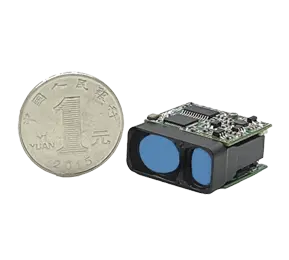
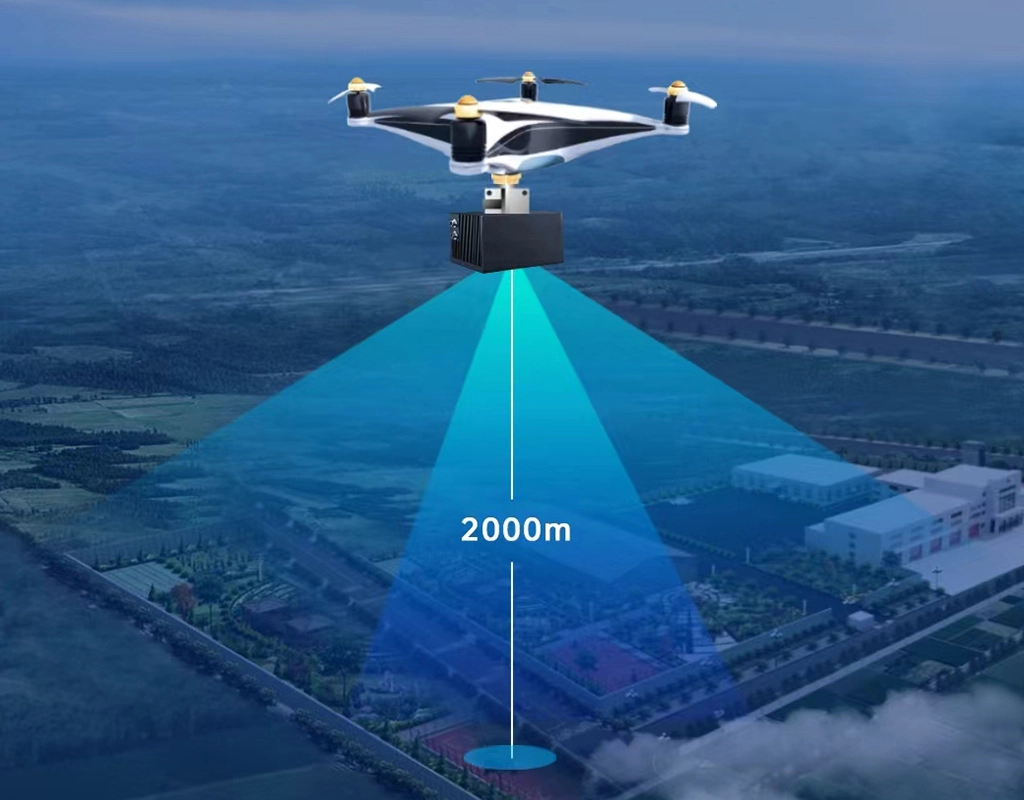
Selecting the right laser ranging solution is important for UAV, EO/IR, and optical sensing systems. Among different technologies, 905nm and 1535nm laser rangefinder modules are widely used because they offer different advantages in detection range, eye safety, size, power consumption, and cost.
For drone manufacturers, payload integrators, and system developers, choosing between a 905nm laser rangefinder module and a 1535nm solution requires understanding the actual application requirements instead of focusing only on maximum range.
Eyoung Technology provides compact laser ranging solutions for UAV platforms, EO/IR systems, and customized optical integration applications, helping customers achieve accurate and reliable distance measurement.
The selection between 905nm and 1535nm technologies depends on platform size, mission requirements, and operating conditions.
A 905nm solution is commonly used in lightweight UAV systems because it provides a good balance between performance, compact design, and cost efficiency. It is suitable for applications such as inspection drones, mapping systems, and commercial UAV platforms.
A 1535nm rangefinder is typically selected for longer-range applications where enhanced eye safety and stronger measurement capability are required. It is often integrated into professional EO/IR systems, surveillance platforms, and advanced UAV solutions.
The best choice depends on factors such as required range, payload limitations, environmental conditions, and overall system objectives.
The wavelength of a laser rangefinder module directly affects ranging performance, safety characteristics, and system design.
905nm wavelength technology is widely adopted because semiconductor laser components are mature, compact, and cost-effective. This makes it suitable for applications where lightweight design and low power consumption are important.
1535nm wavelength technology operates in a safer infrared spectrum, allowing higher output energy while maintaining improved eye safety characteristics. This advantage makes it suitable for demanding applications that require longer detection distances.
However, wavelength is only one factor affecting performance. Target reflectivity, atmospheric conditions, optical design, and system integration also influence final measurement results.
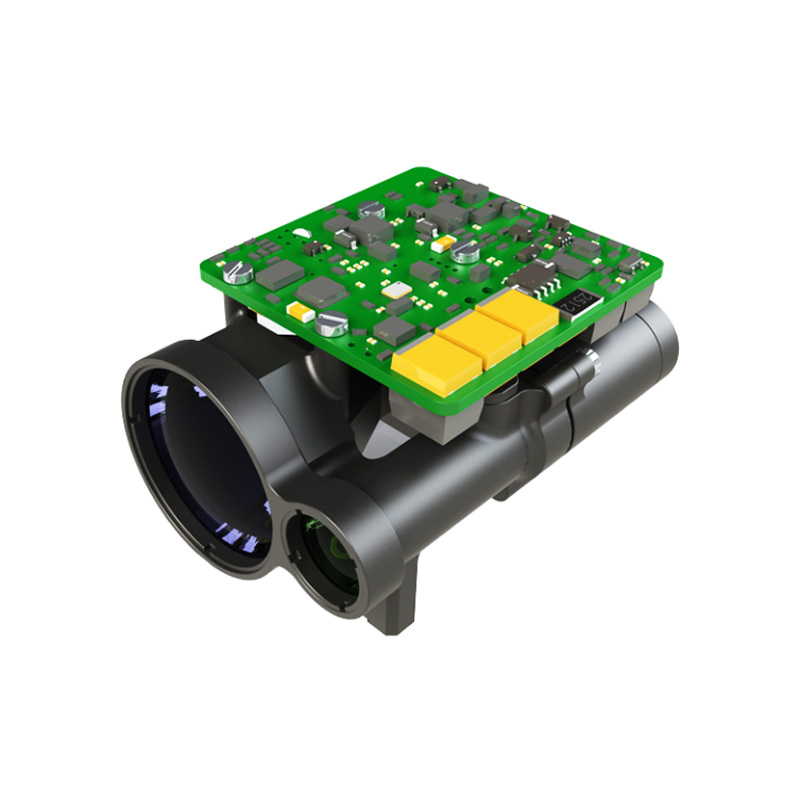
A 905nm laser rangefinder module provides an effective combination of size, efficiency, and performance, making it a popular choice for compact UAV and industrial systems.
Key advantages include:
Compact and lightweight design for easy integration.
Lower power consumption for battery-powered platforms.
Cost advantages for commercial applications.
These features make 905nm solutions suitable for:
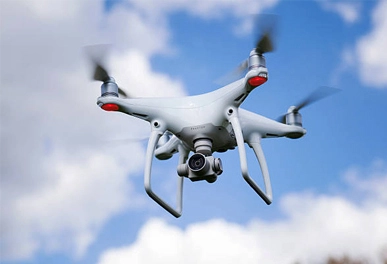
Small and medium UAV platforms.
Industrial inspection systems.
Mapping and surveying equipment.
However, 905nm solutions may have limitations in extremely long-range missions or challenging environments. For applications requiring maximum detection capability, a 1535nm solution may provide better performance.

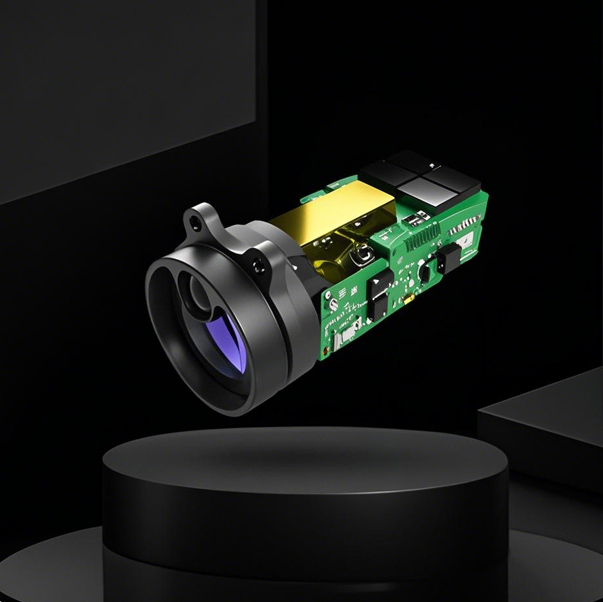
A 1535nm rangefinder is designed for applications where longer detection distance and enhanced safety performance are important.
Compared with 905nm solutions, 1535nm technology can achieve higher ranging capability while maintaining stronger eye safety advantages. This makes it suitable for advanced UAV platforms, EO/IR payload systems, and professional surveillance applications.
The main challenges of 1535nm solutions are higher cost and more complex optical integration. Therefore, they are usually selected for projects where range performance and operational reliability are the primary priorities.

| Feature | 905nm Laser Rangefinder Module | 1535nm Rangefinder |
|---|---|---|
| Range capability | Short to medium distance | Medium to long distance |
| Eye safety | Requires controlled output power | Higher eye safety advantage |
| Size and weight | More compact | Generally larger |
| Power consumption | Lower | Higher |
| Cost | More economical | Higher |
| Typical applications | Commercial UAV and inspection systems | Professional UAV and EO/IR platforms |
Both technologies have their own advantages. The final selection should match the mission requirements and platform design.
Selecting the right rangefinder module for drone applications requires evaluating the complete UAV system rather than the sensor alone.
Important factors include:
Payload size, weight, and installation space.
Required measurement distance and accuracy.
Compatibility with flight controllers and onboard sensors.
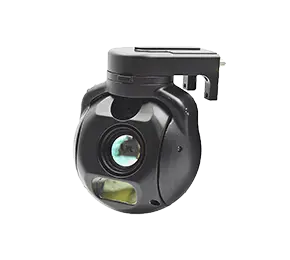
For compact UAV platforms, integrating a laser sensor with a 2 axis gimbal can help maintain stable measurement performance during movement and improve overall payload accuracy.
The selected module should provide reliable ranging performance while fitting the drone’s power, communication, and mechanical requirements.
Laser rangefinders are often combined with visible cameras, thermal sensors, and stabilization systems to create complete optical payload solutions.
A professional UAV gimbal payload requires accurate mechanical integration, optical alignment, and stable communication between different components. The laser module should work effectively with imaging systems to provide accurate distance information for target positioning and autonomous operations.
Eyoung Technology supports UAV and EO/IR developers with compact ranging solutions that can be customized according to different payload designs.

Choosing an experienced supplier is essential for UAV and optical system development. A reliable partner should provide both standard products and customization support.
Key considerations include:
Customized module design and integration capability.
Stable optical performance and quality control.
Technical support during system development.
For companies searching for reliable UAV gimbal manufacturers, selecting a supplier with experience in optical integration and payload development can reduce project risks.
Eyoung Technology provides customized laser ranging solutions for UAV, optical, and industrial applications, supporting customers from product selection to system integration.
Choosing between 905nm and 1535nm laser rangefinder technologies depends on mission requirements, platform design, and expected performance. A 905nm laser rangefinder module is suitable for compact and cost-sensitive UAV systems, while 1535nm solutions are better for longer-range and advanced EO/IR applications. By evaluating range, safety, and integration requirements, users can select the right solution for their projects. Eyoung Technology helps customers develop reliable laser measurement systems for modern UAV platforms.
The main differences include wavelength characteristics, ranging capability, safety performance, size, and cost.
They provide compact design, low power consumption, and suitable performance for lightweight UAV platforms.
1535nm solutions are suitable for applications requiring longer distance measurement and higher safety performance.
Yes. They can work with cameras, thermal sensors, and gimbal payload systems.
Yes. Customized solutions can be developed according to size, interface, and application requirements.
Target reflectivity, atmospheric conditions, optical design, wavelength, and system integration all influence performance.